
Discover how to control greenhouse whiteflies naturally using beneficial predatory mites and parasitic wasps. Learn about Amblyseius swirskii, Encarsia formosa, and Eretmocerus eremicus, including recommended release rates, application methods, and practical integrated pest management strategies.
Entomopathogenic nematodes are beneficial microscopic worms that naturally kill insect pests while remaining safe for humans, plants, pollinators, and the environment. Discover how they work, their life cycle, and why they are among the most effective biological control agents available today.
Phytoseiulus persimilis is a highly effective predatory mite used worldwide for the biological control of spider mites in greenhouses, gardens, and commercial crops.
Watch a YouTube shorts Video on Natural Control of Mealybugs Introduction Mealybugs are among the most destructive soft-bodied pests found…
When it comes to protecting your greenhouse or garden from damaging pests, two of the most common culprits are the…
Watch YouTube video on biological control of fungus gnats with beneficial nematodes. What are fungus gnats? Fungus gnats (Bradysia coprophila,…
Whiteflies and two-spotted spider mites When vegetables or ornamentals are grown in the greenhouse, they are simultaneously attacked by two…
Organic control of two spotted spider mites Two spotted spider mites (Tetranychus urticae) are serious pests of many greenhouse plants…
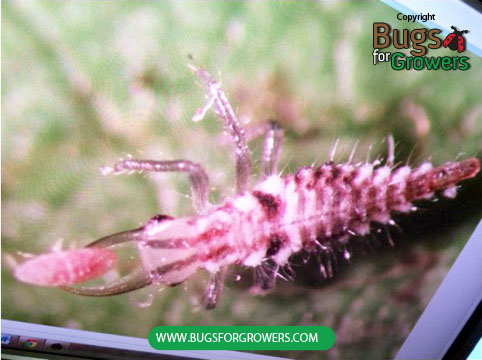
Green lacewings, Chrysoperla rufilabris are predators of soft-bodied insect pests Click YouTube video below to learn about predatory green lacewings…
Important facts of beneficial entomopathogenic Steinernema carpocapsae nematodes- BugsForGrowers.com Beneficial Steinernema carpocapsae nematodes are active at many temperatures but most effective…