
Watch YouTube video on control of greenhouse whiteflies with beneficial nematodes.
Introduction
Whiteflies are among the most persistent and destructive garden (Bemisia spp.) and greenhouse (Trialeurodes vaporariorum) pests (Photo 1). These sap-sucking insects weaken plants, spread viral diseases, and reproduce at incredible speed. For gardeners and growers seeking safe, sustainable solutions, natural and biological control offers an effective alternative to harsh chemical pesticides.
Below, we explore the best eco-friendly strategies—including beneficial insects, microbial tools, and cultural techniques—to help you manage whiteflies naturally.

Understanding the Whitefly Damage
Whiteflies are tiny insects that feed by piercing plant tissue and sucking sap, which:
- Weakens plants
- Causes yellowing and leaf drop
- Encourages sooty mold through honeydew
- Spreads plant viruses
Because whiteflies reproduce quickly (up to 400 eggs per female), early intervention and integrated control are essential.
Beneficial Predators: Naturally Control Whiteflies
Introducing or encouraging natural enemies is one of the most effective ways to achieve long-term suppression.
1. Ladybugs (Ladybird Beetles)
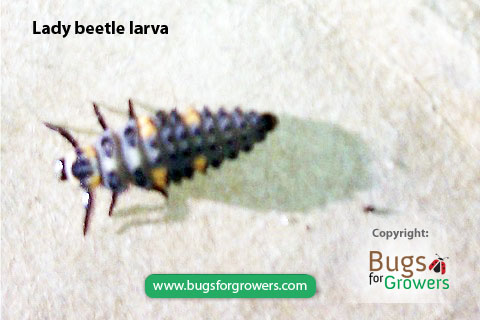
Adult lady beetles and larvae consume (Photo 2) whitefly eggs and nymphs. Releasing ladybugs in greenhouses and gardens can significantly reduce populations.
2. Lacewings
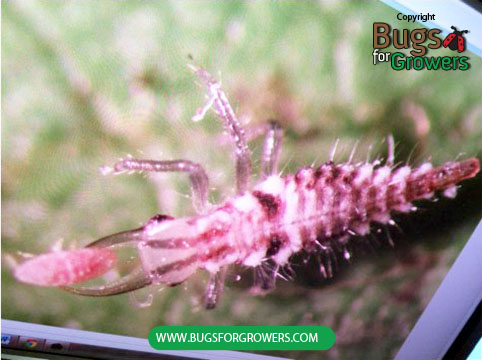
Green lacewing larvae (Photo 3), known as “aphid lions,” devour whitefly nymphs with incredible intensity thus reducing populations below economic threshold fast.
3. Predatory Beetles (Delphastus catalinae)
Highly specialized whitefly predators that munch on various stages of whiteflies and excellent for serious infestations, especially in greenhouses.
Parasitoids: Nature’s Precision Whitefly Killers
Parasitoid wasps lay their eggs inside whitefly nymphs. As the wasp develops, the whitefly is consumed from the inside.
- Encarsia formosa: This is one of the most effective and widely used biological control agents, especially in greenhouse tomato, cucumber, and ornamentals production.
- Eretmocerus eremicus: Performs well in warm climates and is effective against several whitefly species.
These wasps don’t harm humans or plants—they work silently in the background, keeping whitefly populations in check.
Beneficial Entomopathogenic Nematodes
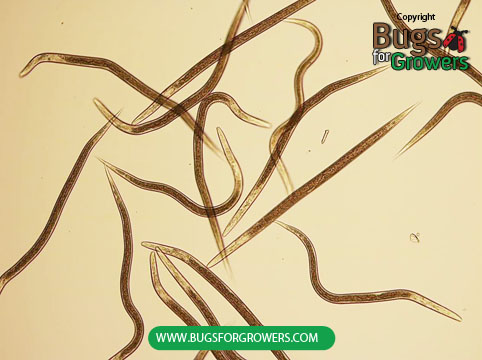
Beneficial nematodes (Photo 4) such as Steinernema feltiae can effectively control whiteflies when applied with wetting agents (adjuvants- 1% solution of horticulture oil) that allow the nematodes to move freely across leaf surfaces to find, infect, and kill whitefly larvae or nymphs. Adjuvants also help protect nematodes from exposure to UV light.
Botanical and Natural Sprays
When used correctly, natural sprays control whiteflies without harming the environment.
- Neem Oil: Acts as an insect growth regulator and repellent. It disrupts whitefly life cycles and prevents eggs from hatching.
- Insecticidal Soaps: Break down the pest’s protective coating, killing soft-bodied insects like whiteflies on contact.
- Horticultural Oils: Smother eggs and nymphs. Useful during cooler times or dormant seasons.
Tip: Always spray the undersides of leaves—whiteflies congregate and lay eggs there.
Cultural Practices
- Remove heavily infested leaves: Physically removing early hotspots slows population growth.
- Use yellow sticky traps: These capture adult whiteflies and help monitor infestation levels and reduce further reproduction.
- Encourage biodiversity: Planting flowers like dill, alyssum, and marigolds attracts natural predators.
- Avoid over-fertilizing: Excess nitrogen produces soft, lush growth that whiteflies prefer.
Beneficial Entomopathogenic Fungi
- Beauveria bassiana: Infects and kills whiteflies over several days. Safe for beneficial insects and widely used in organic farming.
- Isaria fumosorosea (fungal bio-insecticide): Effective in greenhouse settings with controlled humidity.
These microbial controls work best when humidity is moderately high and temperatures are mild.
Integrated Whitefly Management Plan
The most effective whitefly control combines multiple methods:
- Monitor with sticky traps.
- Release beneficial insects or parasitoids.
- Spray natural oils only when necessary and at times that minimize harm to predators.
- Maintain plant health with proper spacing, watering, and fertilization.
This integrated approach reduces whitefly numbers without disrupting your garden’s ecosystem.
Conclusion
Natural and biological control of whiteflies is not only possible—it’s highly effective when combined with smart gardening practices. By supporting beneficial insects, using targeted organic sprays, and keeping plants healthy, you can enjoy a more balanced and resilient garden. If you want a pesticide-free strategy that protects your plants and the environment, these methods offer the perfect solution.
Watch a YouTube video the control of whiteflies and spider mites