
Watch YouTube video on “Stopping Overwintering of Small Hive Beetles with Beneficial Heterorhabditis bacteriophora nematodes.”
Introduction
As the beekeeping season winds down, it’s easy to put small hive beetle (Aethina tumida) (Photo 1) management on the back burner. However, don’t wait until spring to deal with small hive beetles. Fall is an important opportunity to prevent the emergence of the next generation of small hive beetles before they move into hives and become next year’s pest problem. Small hive beetles spend part of their life cycle inside the colony, but mature larvae leave the hive and enter the surrounding soil to pupate. This soil-dwelling stage creates an important target for biological control agents such as beneficial entomopathogenic Heterorhabditis indica nematodes.

Why target the soil to control small hive beetles?
Mature small hive beetle larvae successfully leave honeybee colonies and burrow into the soil, where they pupate and eventually emerge as adults. These adults can return to colonies and contribute to future infestations and damage to honeycombs and broods. Instead of waiting for beetles to appear inside the hive again, treating the soil around beehives allows beekeepers to target the pest while it is outside the colony. The objective isn’t simply to kill the adult beetles you can see; it is to interrupt the life cycle before the next generation emerges.
How Heterorhabditis indica can help
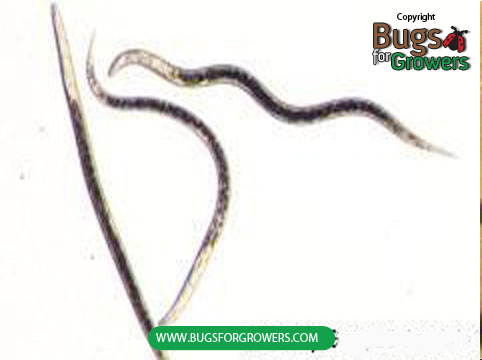
Heterorhabditis indica is an entomopathogenic nematode—a microscopic roundworm (Photo 2) used as a biological control agent against soil-dwelling insect pests, including small hive beetle larvae and pupae. When applied to soil around beehives, infective nematodes search for susceptible small hive beetle larvae and pupae. The nematodes infect these stages and release symbiotic bacteria that multiply and cause septicemia, killing the larvae and pupae within approximately 48 hours. This can stop their development and prevent the emergence of the next generation of beetles before they enter honeybee hives, where they can cause damage to honeybee colonies or overwinter.
Why fall is an important small hive beetle management window
The exact timing of small hive beetle activity varies with climate, soil conditions, and colony conditions. However, the principle is straightforward: target beetles while their mature larvae are still entering or developing into pupae in the soil, rather than waiting for the next generation of adults to emerge. Applying beneficial nematodes while soil temperature and moisture are suitable for their survival can put biological control pressure on the soil-dwelling stages. For beekeepers in warmer regions, small hive beetles may continue reproducing for an extended portion of the year. In cooler regions, late-season treatment can be particularly useful as part of an effort to reduce the population of beetles entering hives for overwintering and causing damage to honeybee colonies the following spring.
How to apply beneficial nematodes around honeybee hives
Follow the instructions supplied with the H. indica product you purchase regarding concentration, formulation, recommended application rates, and application methods. In general, successful applications depend on providing nematodes with favorable soil conditions for movement and survival.
Keep the soil adequately moist: Beneficial nematodes need moisture to move through the soil. Therefore, irrigate the target area before and after applying the nematodes. Avoid applying them to extremely dry soil.
Protect nematodes from intense sunlight: Direct exposure to UV light can quickly kill nematodes. Apply nematodes early in the morning or late in the evening, when direct sunlight and heat are lower. Nematodes are living biological organisms and can be sensitive to harsh environmental conditions.
Application of beneficial nematodes on the soil around the honeybee hive: Small hive beetle larvae leave the hive and enter nearby soil, often within a 3-foot radius of the beehive, to pupate. Therefore, treating the soil surrounding honeybee hives can help nematodes encounter mature larvae and pupae of small hive beetles. For effective control of small hive beetle larvae and pupae, it is recommended to apply 25,000 Heterorhabditis indica nematodes per square foot to the area within a 3-foot radius around honeybee hives.
How to stop the next generation of small hive beetles
To manage small hive beetle populations using nematodes, we need to understand where the susceptible stages occur in their life cycle. The life cycle of small hive beetles consists of four developmental stages: eggs, larvae, pupae, and adults. Of these four stages, eggs, immature larvae, and adults reside inside beehives, whereas mature larvae and pupae are found in the soil around honeybee hives.
Inside the hive, adult beetles and immature larvae are difficult to target with Heterorhabditis indica nematodes because the nematodes would need to survive and infect these stages within the hive. However, mature larvae leave the hive and enter the soil to pupate, making this stage more vulnerable to biological control. This means that mature larvae and pupae can be targeted and killed using Heterorhabditis indica nematodes.
Now is an important time to apply nematodes to target mature larvae and pupae and help prevent the emergence of the next generation of small hive beetles before they move into hives for overwintering. The final goal is simple: reduce the number of beetles completing the soil stage today so there are fewer beetles waiting for you next season.
Conclusion
Beneficial entomopathogenic Heterorhabditis indica nematodes have been shown to be a useful biological control option against the soil-dwelling stages of small hive beetles. Therefore, for beekeepers looking for a more integrated and biologically based approach to small hive beetle management, treating the soil around hives with beneficial Heterorhabditis indica nematodes may be a valuable addition to the beetle management toolbox. So, don’t wait until you see next year’s beetles. Target the soil stage now.