
Watch YouTube video on natural control of greenhouse fungus gnats!
Introduction
Fungus gnats (Bradysia species) are a common insect pest in greenhouses, nurseries, and indoor growing environments. Flying adult fungus gnats (Photo 1) are a nuisance to people and their larvae live in growing media cause damage to plants. Larvae generally feed on plant stems, crowns, and roots, causing yellowing, stunted growth, and eventually, plant death. Both adults and larvae can also spread disease-causing pathogens between plants. However, natural enemies, like predatory mite, Stratiolaelaps scimitus, can serve as effective biological control agents, offering an environmentally friendly solution for managing fungus gnats in greenhouses.

What are Stratiolaelaps scimitus mites?
Stratiolaelaps scimitus, formerly known as Hypoaspis miles, is a small predatory mite that naturally lives in soil and growing media. It is widely used for biological pest control in greenhouses. These beneficial mites are light brown and less than 1 mm long. They actively hunt and feed on small soil-dwelling pests, including fungus gnat larvae. This makes them effective biological control agents in greenhouse production and ornamental plant cultivation.
How do predatory mites control fungus gnats?
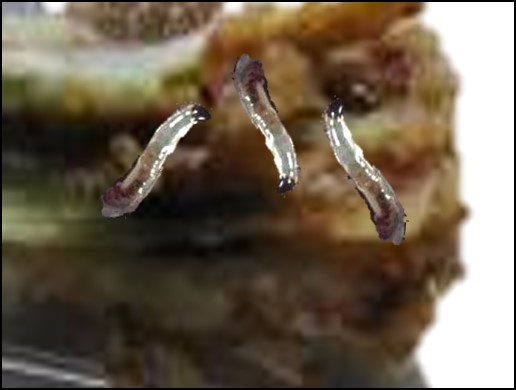
The primary target of Stratiolaelaps scimitus is the larval stage of fungus gnats, especially newly hatched larvae. These predatory mites move through the growing medium to locate and capture small insects, including fungus gnat larvae (Photo 2). Both nymphs and adult mites feed on fungus gnat larvae. They reduce pest populations before the larvae develop into flying adults that can mate and lay more eggs. This helps prevent future infestations and reduces pest-related nuisances. In addition to fungus gnat larvae, Stratiolaelaps scimitus feeds on thrips pupae, shore fly larvae, and other small soil-dwelling arthropods. When prey is scarce, these predatory mites can survive by feeding on algae and decomposing plant material.
How to apply Stratiolaelaps scimitus
For successful biological control, introduce predatory mites before fungus gnat populations become established. They can also be applied when pest numbers are still low. Commercially available mites are usually supplied in a carrier material. This may include vermiculite, peat, or another suitable substrate. Before application, ensure the growing medium is moist but not waterlogged. Sprinkle the carrier material evenly over the surface of the growing medium. Ensure good coverage across all pots and growing areas. For best results, apply predatory mites to moist growing media at the following rates:
- Preventative control: 100 mites per square meter.
- Light infestations: 250 mites per square meter.
- Heavy infestations: 500 mites per square meter.
Benefits of using predatory mites in biological control
Using Stratiolaelaps scimitus offers several benefits. These predatory mites help reduce the need for conventional chemical insecticides. They target fungus gnat larvae before they develop into flying adults. They can also provide long-term control. Under suitable growing conditions, they reproduce and maintain their populations. In addition, they feed on other soil-dwelling pests, such as thrips pupae and shore fly larvae. For severe fungus gnat infestations, predatory mites can be combined with beneficial Steinernema feltiae nematodes.
Conclusion
Stratiolaelaps scimitus is a valuable predatory mite for controlling fungus gnats in greenhouses, nurseries, and other growing environments. These natural predators actively hunt fungus gnat larvae in the growing media. They help prevent pest populations from increasing and support more sustainable plant production. For growers looking to reduce chemical inputs and adopt environmentally responsible pest management practices, S. scimitus is an effective option.